CORED, Lucy Gill and Josh Jensen, Produit Rien Gallery, January 1 - February 28, 2026
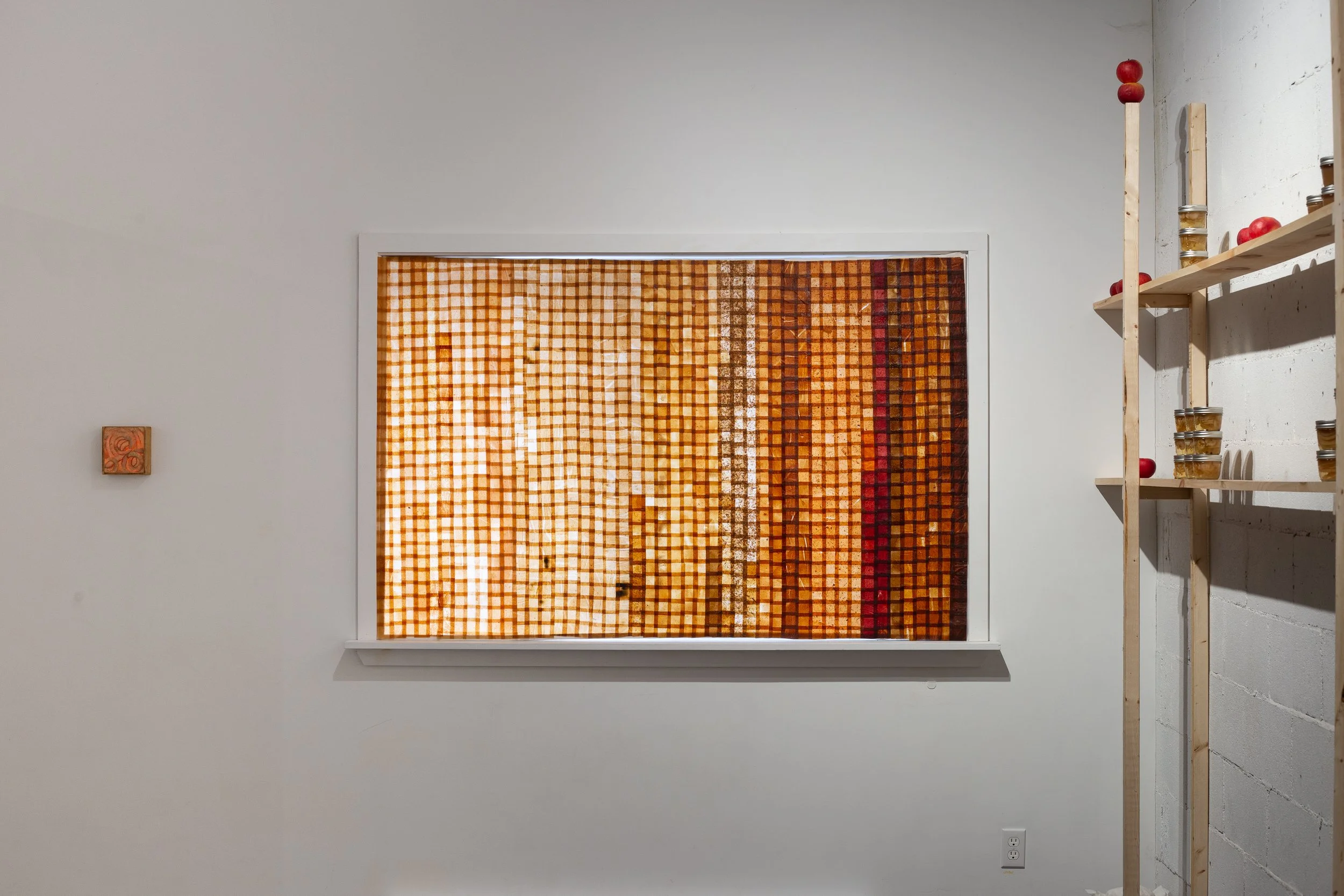
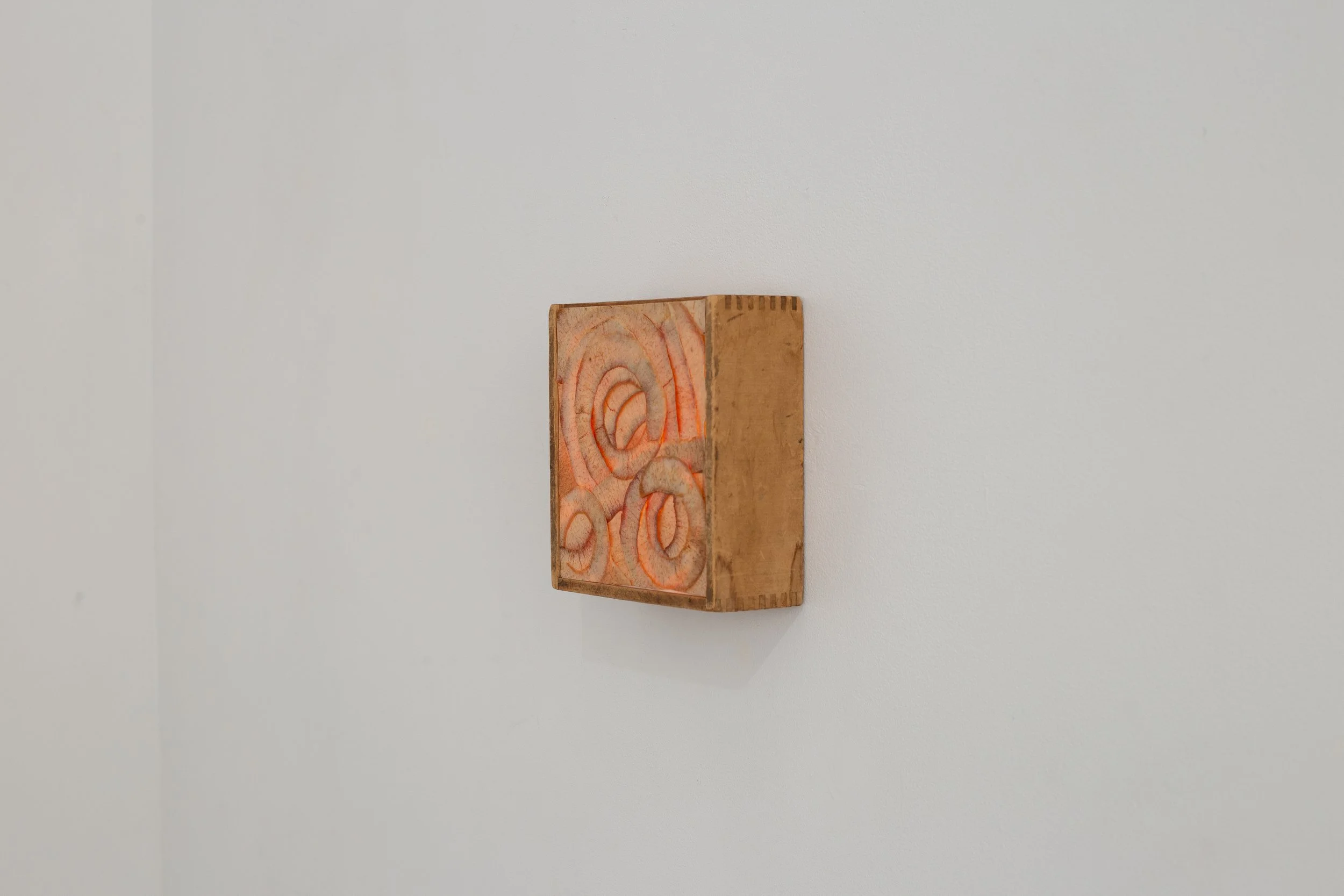
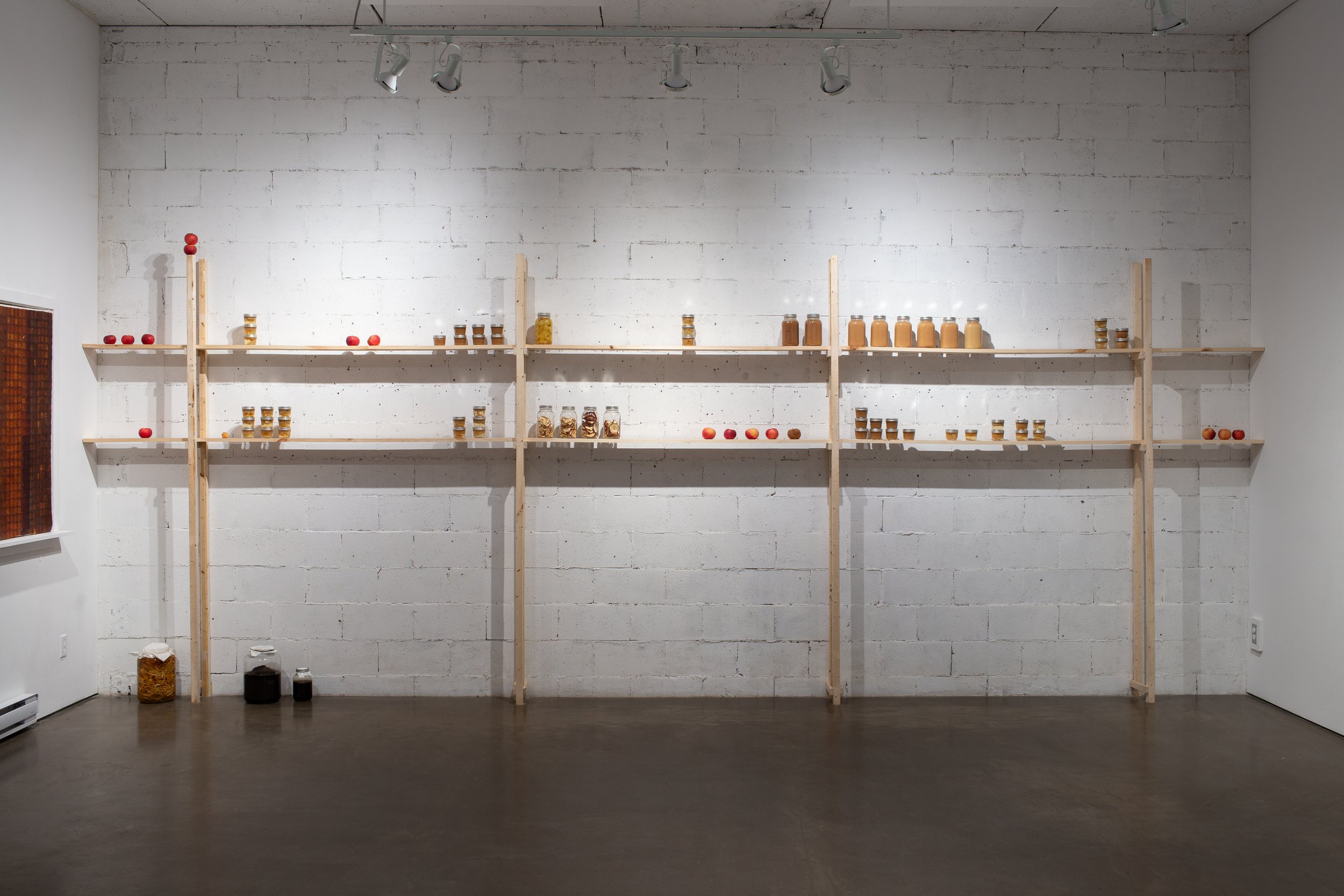
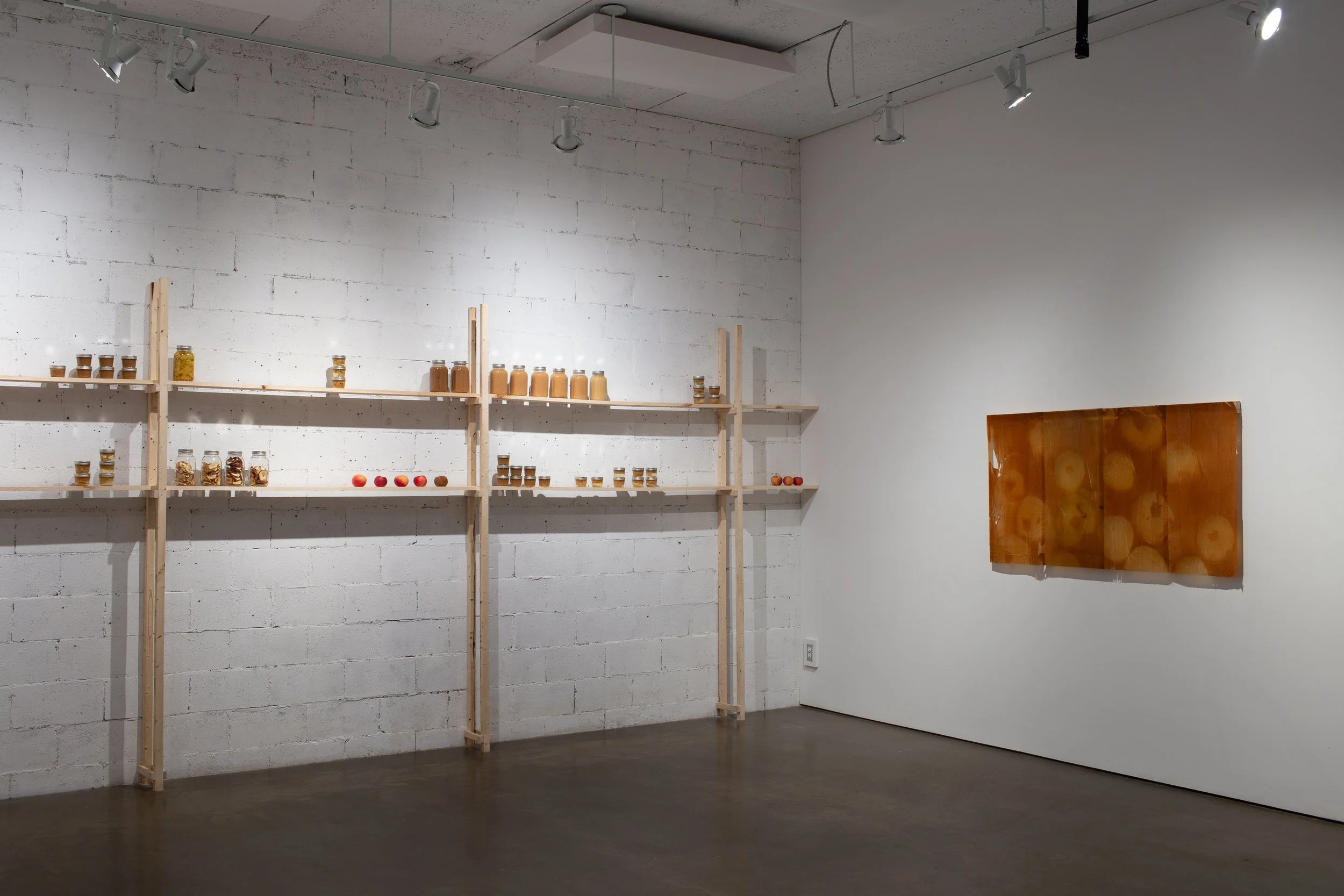
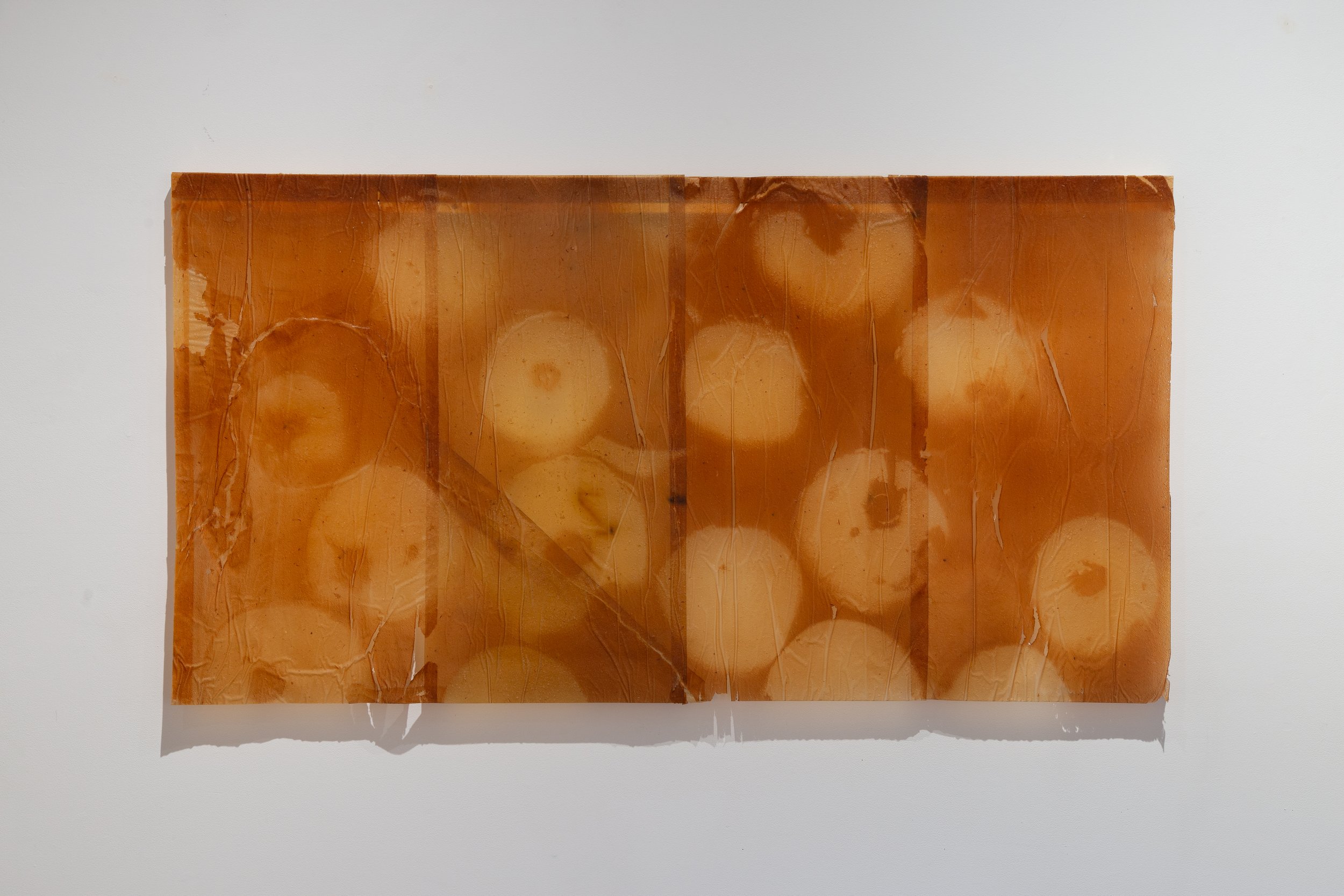
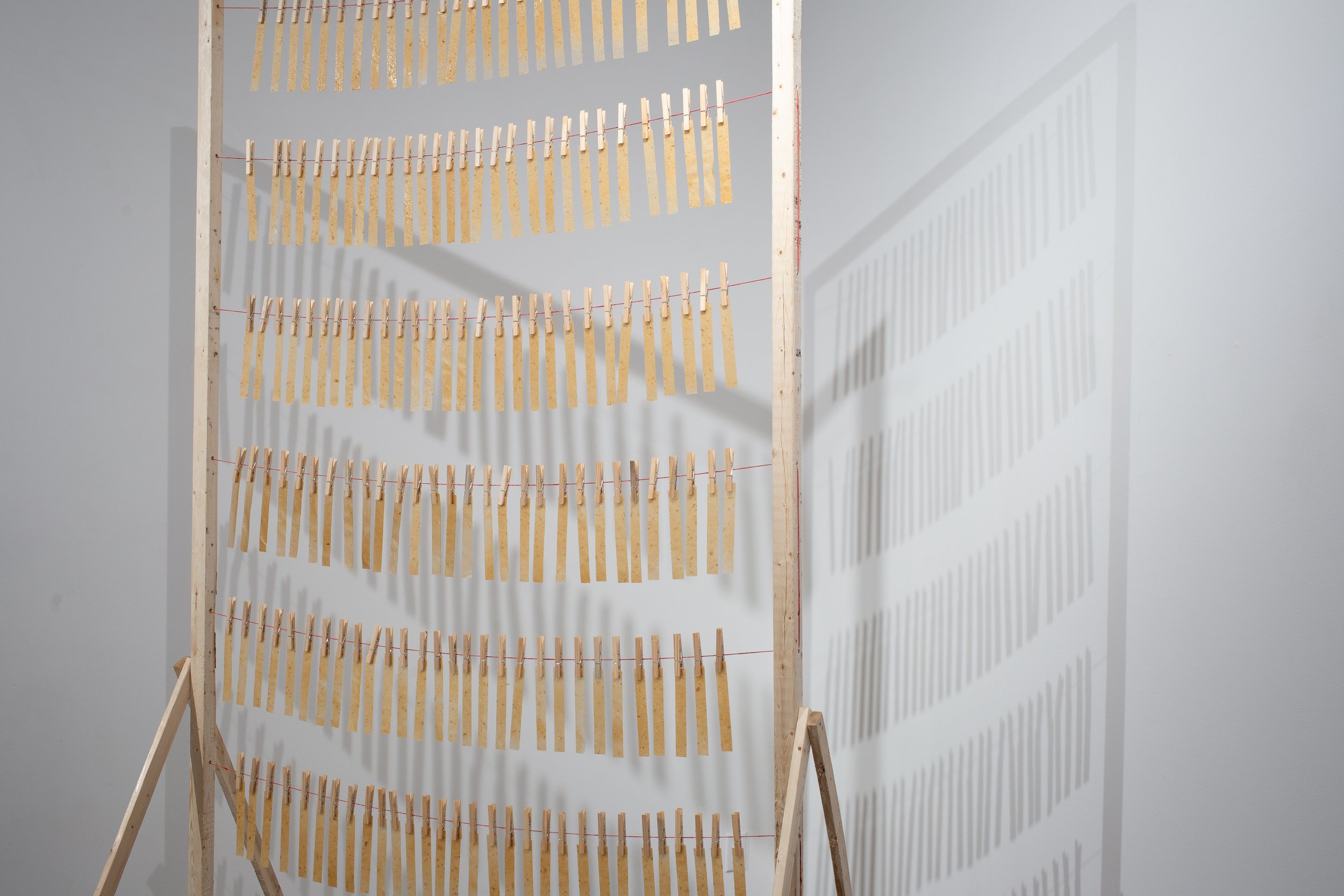
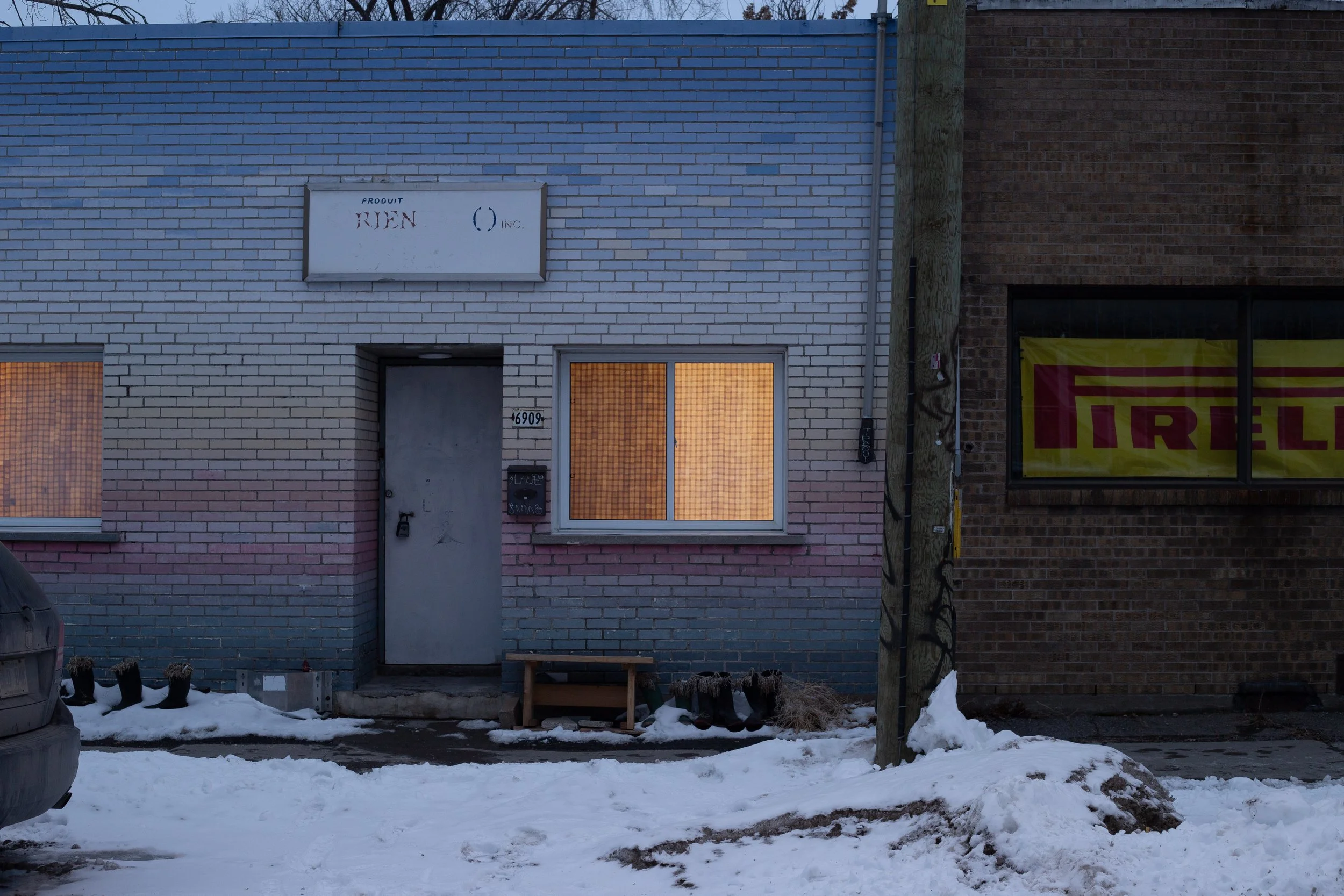
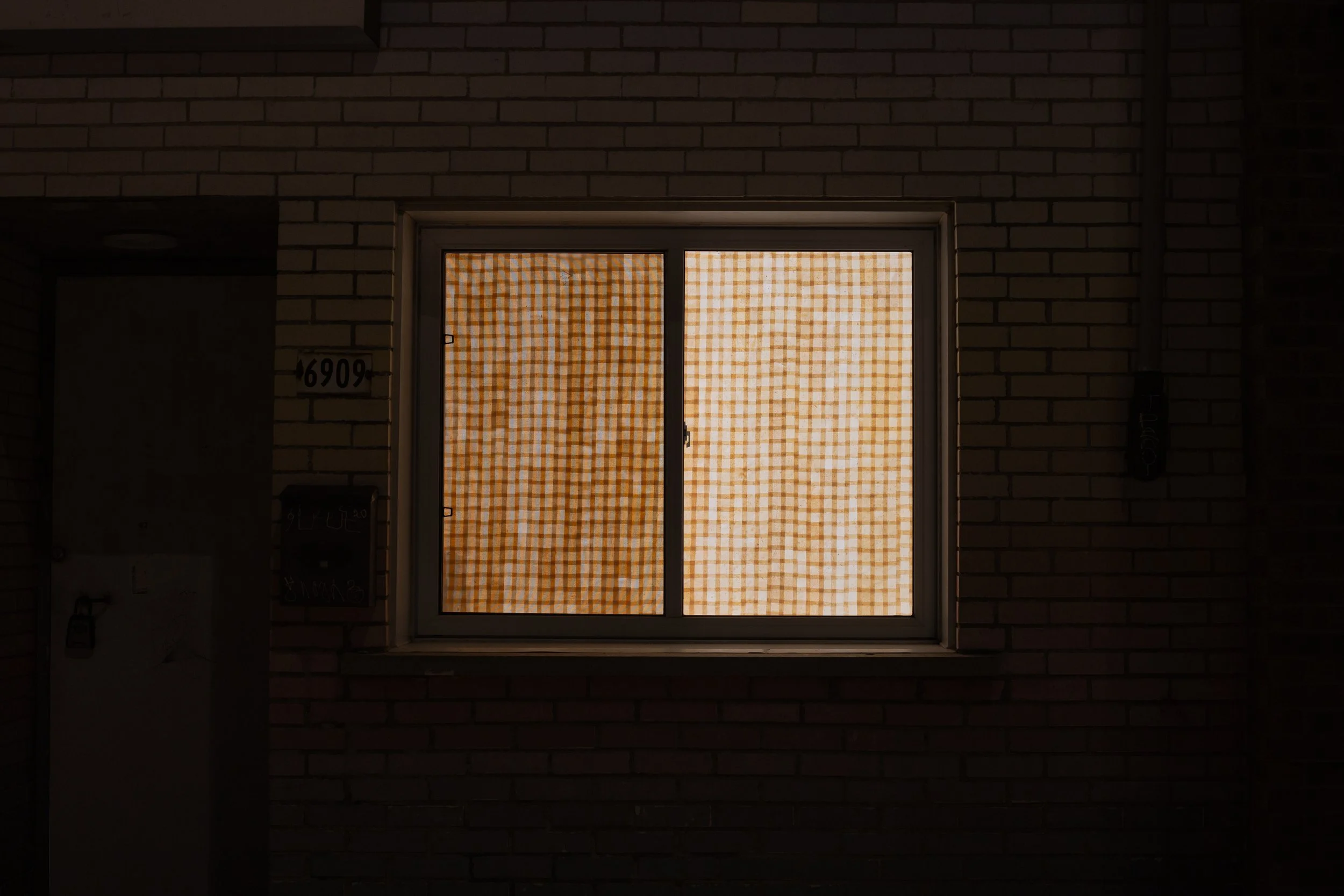
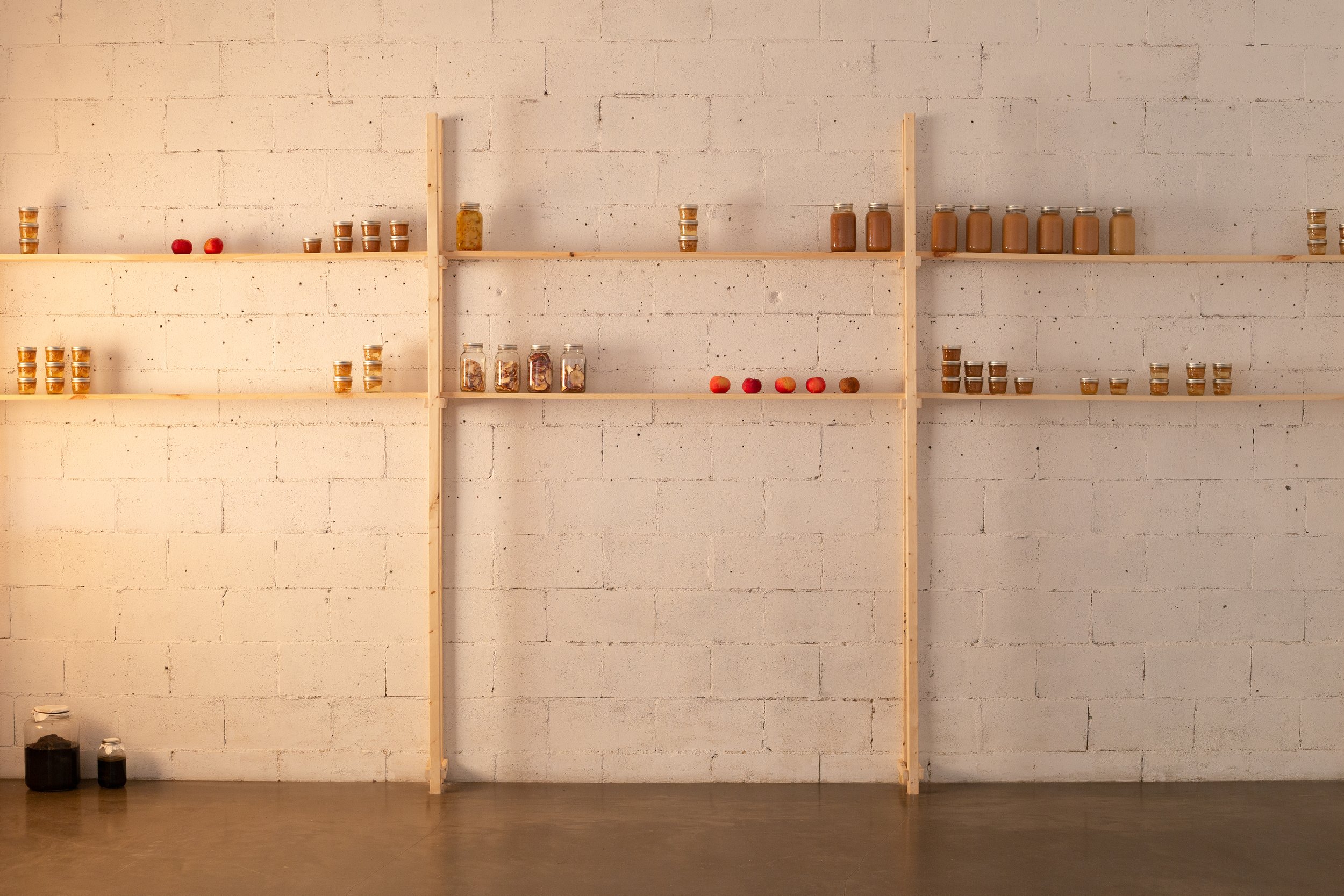
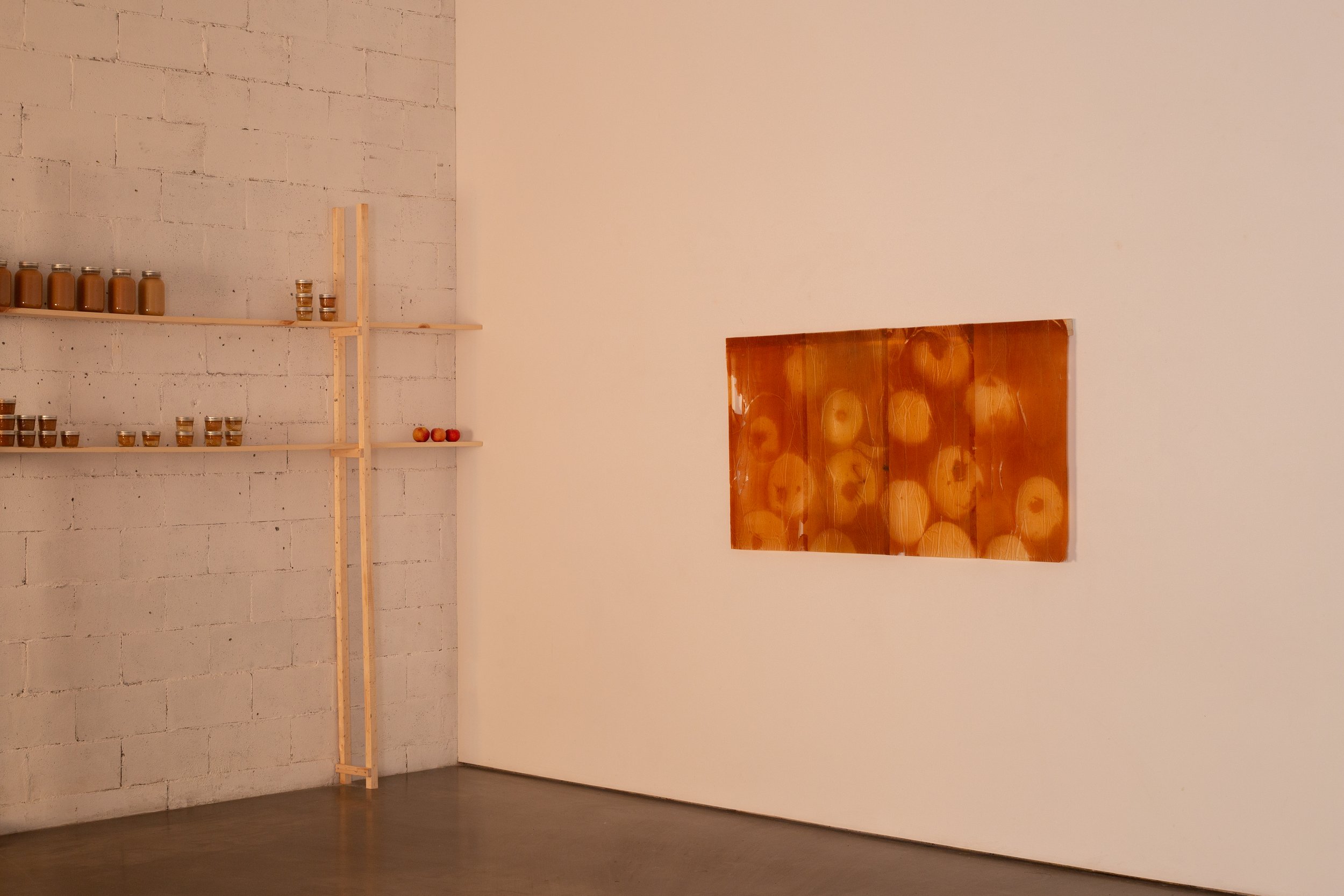
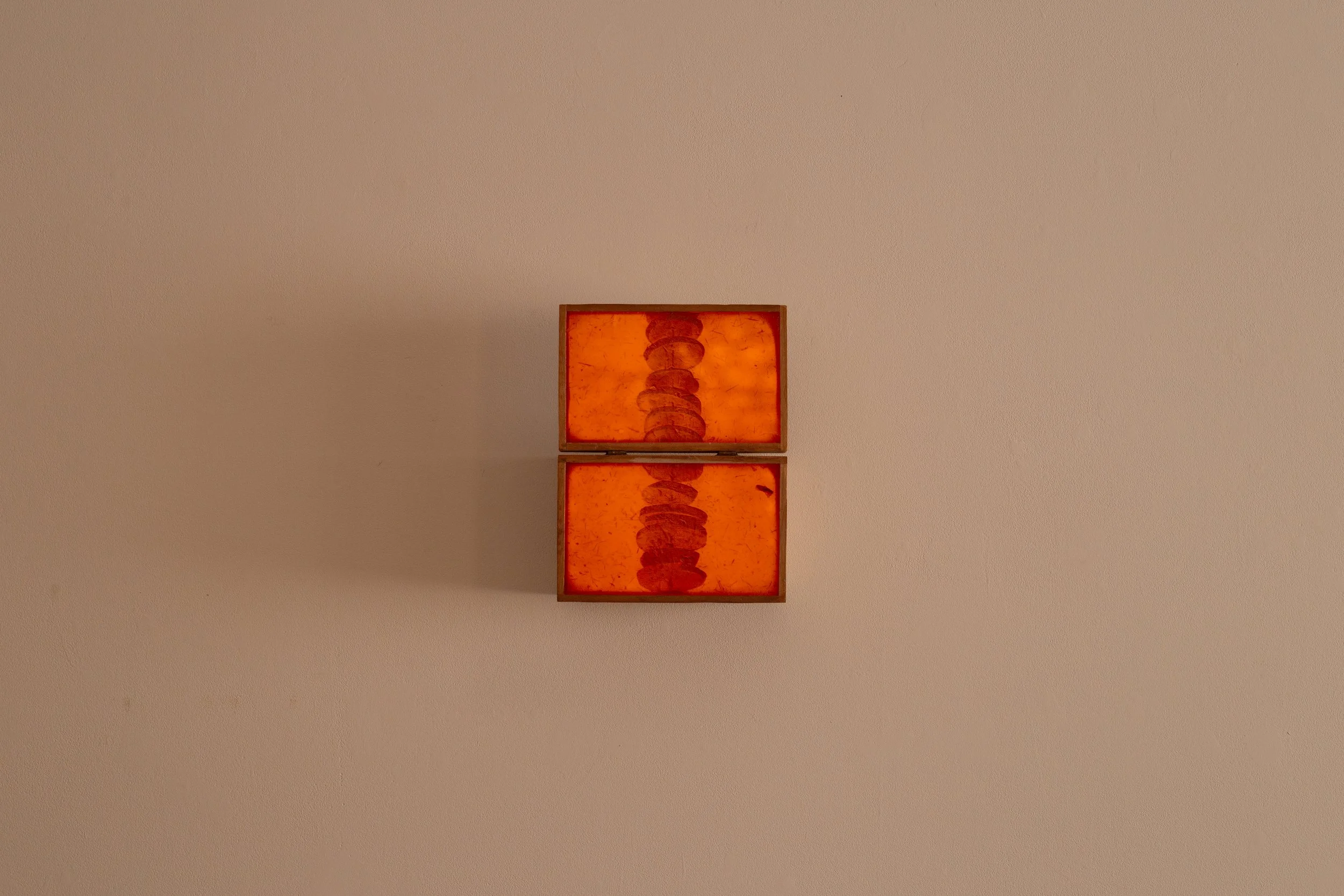
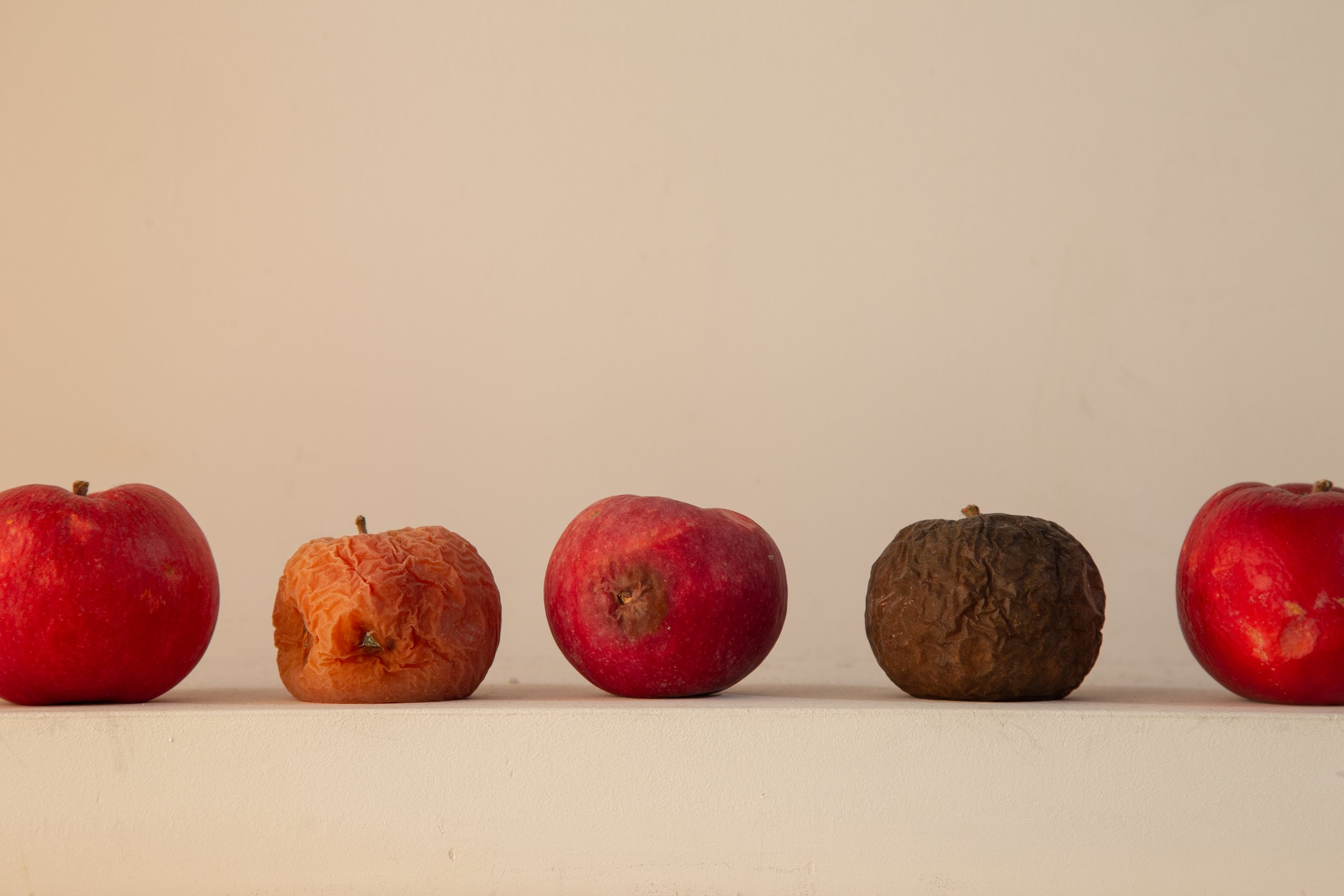
Tart and sweet, bright and warm—the scent of stewing apples hangs in the air here, carrying a domestic feeling, immediate and dense, of kitchens and windowsills. The residual fragrance is one slice of the apple for us to examine, laid out in the space like ingredients on the small worktable. Ten years ago, the smell of fermenting soy enveloped this space when it was used to produce tofu, organic remnants later left to rot on the presses and floors. Now, there is also the kitchen-studio-laboratory space inhabited by Lucy Gill and Josh Jensen. There is the tangy chew of apple leather samples, some modulated by rosehips or blueberries. The Tklapi display rack and the shelves lined with jars gesture to Georgian and Mormon traditions of preservation, gathering fruit and time, eight hours a day once a week, into a shared rhythm of labour and company.
CORED is slowly brought to a simmer: peeling apples (spiraling skin), hosting friends, cores and seeds set aside, chopping apples, chatting, cooking them till soft and mushy with a bit of lemon juice. Then blended up until smooth—“applesauce,” perhaps, if we were to spoon it into a bowl, but something else—raw material as a thickish paste, a sweet pulp—if put to another use, as in Lucy and Josh’s shared practice.
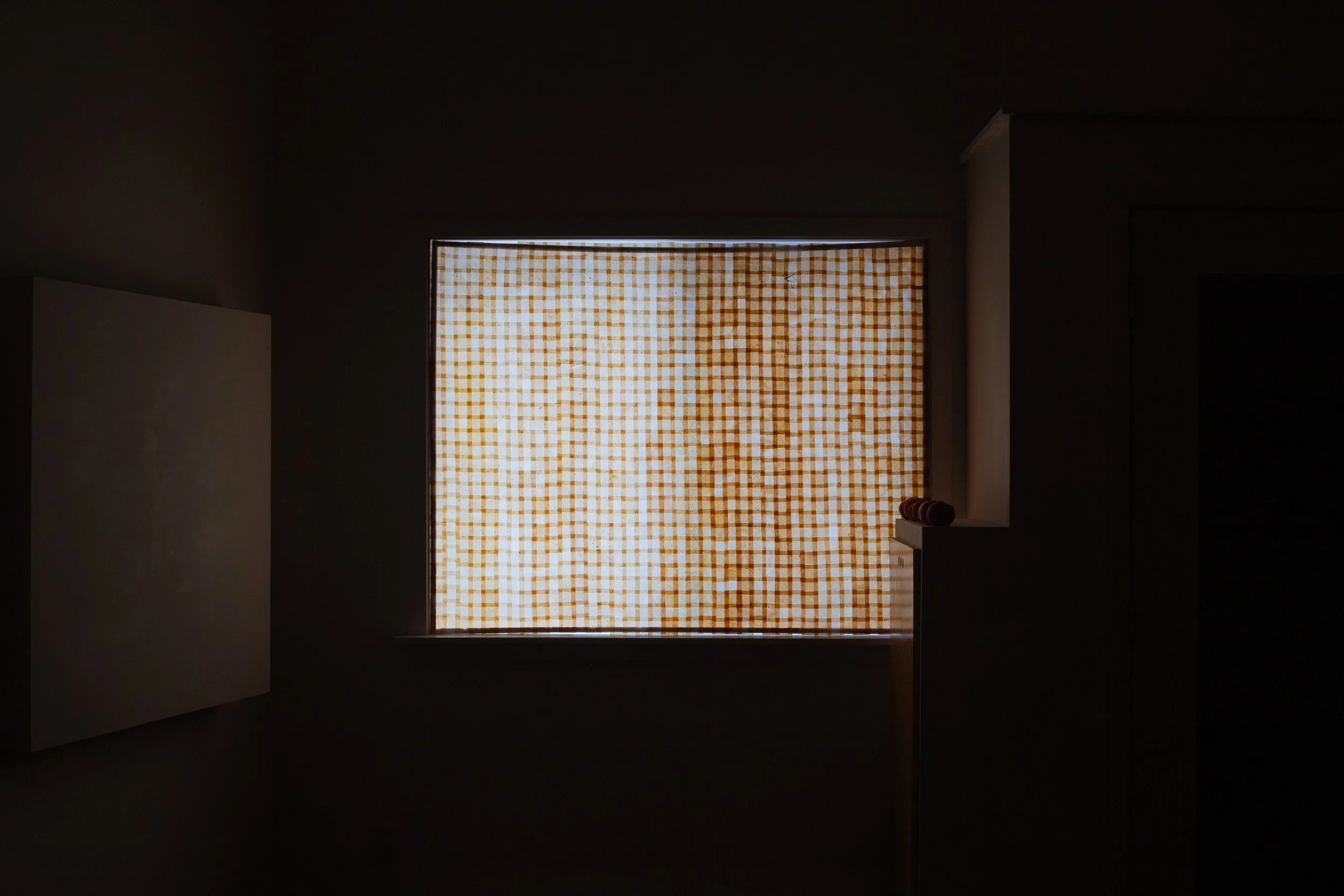
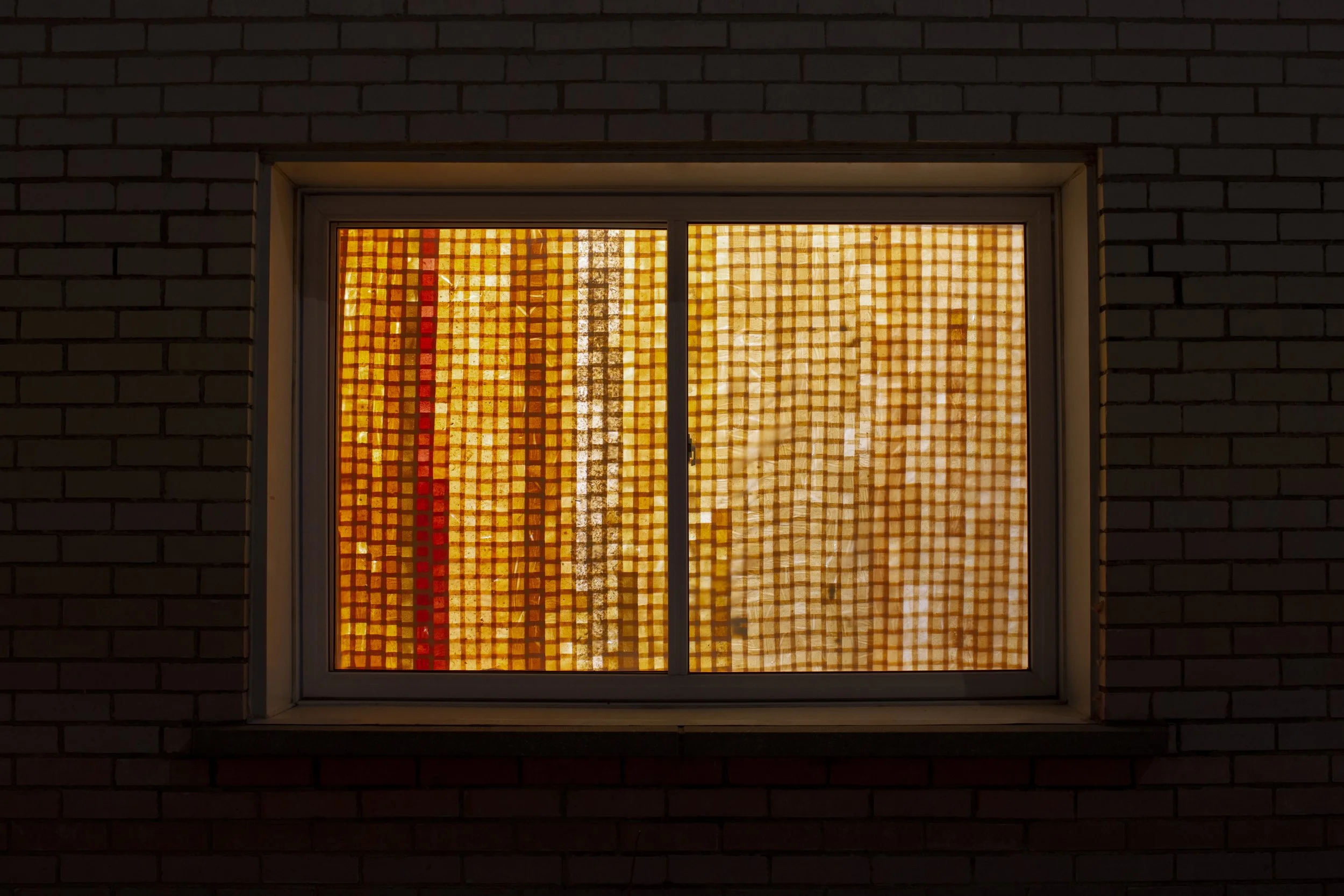
They propose two structures of apple time: fermentation, on one hand, where decay unfolds through the cores’ own juices and sugars, combined with water and a vinegar starter—lively, sour, ever-changing. On the other, dehydration, which lures moisture out of the pulp, leaving behind a concentrated preserve, a skin-like surface, a stillness. Stretched across the windows, the fruit leather is material for piecework, for altering light.
Their process is one of stretched time—of gradual accumulation, repetition, and preservation. As feminist theorist Karen Barad writes, “matter in its iterative materialization is a dynamic play of in/determinacy. Matter is never a settled matter. It is always radically open.” In working with the apple’s temporality, Josh and Lucy draw our attention to its attendant possibilities and realities: of stickiness, of deepening hue, of sustenance to be shared, of tomorrow, of next year. (Of an end, maybe: eaten, moth-nibbled, redistributed, decomposed.) Each week the days get longer and the sun moves through the space sequentially, illuminating first the shelf, now the table, now the display rack. Tasting unfolds in a similar way, writes Roland Barthes, in a progression of “entrances, returns, overlappings.” Small squares of leather are lined up, piece by piece, sweet lenses gathered to form a larger framework.
Conversation, demonstration and shared labour all contribute to the liveliness in the room, open and invitational, participatory and collaborative. There is this active, generative slipperiness between kitchen-studio and exhibition, thinking and making, making and digesting, food and material, preserved yet still unfixed—[here: time’s rush forward].
All of these things simmer pleasantly in the stomach of the space and I think about fermentation as a group activity, a mutually-constituted reality. One thing leaks into another, sequential and circular: steel wool in the vinegar to make a stain, a peeler passed hand to hand in the course of a sentence, the warm tang of the leather lingering in my mouth through the cold afternoon.
Hannah Ferguson
With thanks to: Karen Trask, Paul Litherland, Gwynne Fulton, Thomas Alexandre, Hannah Blair, Joé Côté-Rancourt
1. Stephan Dussault, "Du tofu pas si soyeux," le Journal de Montreal, Vendredi, 22 mai 2015, https://www.journaldemontreal.com/2015/05/22/du-tofu-pas-si-soyeux.
2. Karen Barad, "On touching—The Inhuman That Therefore I Am," Differences: A Journal of Feminist Studies 23, no. 3 (2012), 214-215.
3. Roland Barthes, "Reading Brillat-Savarin," in The Rustle of Language, trans. Richard Howard (University of California Press, 1986), 250.